

Ben Lamm told Dax Shepard how scientists created Romulus, Remus and Khaleesi as debate continues over whether they are true dire wolves. The Dax Shepard Gets Inside Story On Controversial Dire Wolf Puppies first appeared on The Blast
Dax Shepard’s latest “Armchair Expert” guest did not arrive with a movie, album, or television series to promote. He came armed with ancient DNA, three enormous puppies and a plan to bring mammoth-like creatures back to the planet. Colossal Biosciences co-founder and CEO Ben Lamm joined Shepard for the podcast’s September 23 episode, where he explained the science behind Romulus, Remus and Khaleesi. Colossal has promoted the animals as the world’s first de-extincted dire wolves. However, the headline-making achievement has also sparked a debate among outside scientists over what the puppies actually are.
Dax Shepard Hears How The Dire Wolf Project Began

During his appearance on “Armchair Expert,” Ben Lamm walked Shepard through Colossal’s efforts to study the dire wolf, an Ice Age predator that disappeared approximately 13,000 years ago. Dire wolves once roamed throughout North and South America. Fossils have been discovered from Alaska to Mexico, with a particularly large number found at California’s La Brea Tar Pits.
Colossal’s scientists examined genetic material obtained from two ancient specimens. One was a tooth found in Ohio that was approximately 13,000 years old. The other was an inner ear bone discovered in Idaho that was approximately 72,000 years old, per Colossal’s website.
Researchers used the genetic information to identify features that differentiated dire wolves from their living relatives. The team then made 20 targeted edits across 14 genes in gray wolf cells. The edited cells were used to create embryos, which were implanted in domestic dog surrogates. That process ultimately produced Romulus, Remus and Khaleesi.
Romulus and Remus were named after the legendary founders of Rome who were raised by a she-wolf. Khaleesi’s name honors the “Game of Thrones” character played by Emilia Clarke, giving the project an unavoidable connection to the HBO series that helped make dire wolves famous to modern audiences.
The Puppies Were Engineered To Have Dire Wolf Traits
The puppies were designed to exhibit physical characteristics associated with dire wolves, including a larger frame, broader shoulders, a wider skull, muscular legs, and prominent canine teeth. They also have thick white coats, although the exact appearance of prehistoric dire wolves remains a subject of scientific discussion.
Romulus and Remus were born in October 2024, while Khaleesi arrived in January 2025. The male pups had already reached approximately 80 pounds by the time Colossal publicly announced them, while the younger Khaleesi weighed around 25 pounds. By their first birthday, Colossal reported that Romulus and Remus had grown to approximately 120 pounds.
The three animals live on a secure, undisclosed 2,000-acre preserve in the United States, where they are monitored by animal-care and scientific teams.
Colossal says the wolves have displayed different vocalizations and physical features from typical gray wolves. The company also expects them to reach as much as 150 pounds, potentially making them considerably larger than many modern wolves.
The scale of the project gave Shepard plenty to unpack as Lamm explained how researchers moved from fragmented ancient DNA to living animals displaying traits last seen thousands of years ago.
- Last year, a genetically engineered woolly mouse stole the Christmas spotlight with a little help from science.
- Ben Lamm sparked global discussion after making a bold prediction about humanity’s ability to engineer new life.
Are They Really Dire Wolves?
While Colossal describes Romulus, Remus and Khaleesi as dire wolves, some independent scientists have challenged that classification. The animals are not clones of preserved dire wolves, and no ancient dire wolf DNA was directly inserted into their genomes.
Instead, scientists edited genes in gray wolf cells to recreate selected traits linked to the extinct species. That distinction has led outside experts to describe the puppies as genetically modified gray wolves rather than resurrected dire wolves.
Colossal Has An Even Bigger Goal In Sight
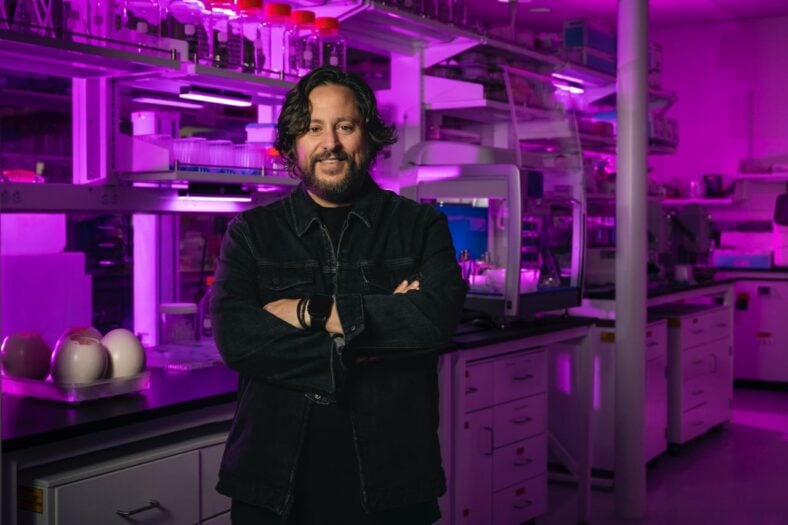
Romulus, Remus and Khaleesi are only one part of Colossal’s much larger de-extinction mission. The company was founded in 2021 by Lamm and Harvard geneticist George Church, whose work on the woolly mammoth helped inspire the venture. Lamm told Shepard that he asked Church what scientific project he would pursue if funding were not an obstacle. That conversation helped set Colossal on its current path.
The company is now working to produce a cold-resistant elephant with defining woolly mammoth characteristics, including shaggy hair, insulating fat and other adaptations associated with surviving in Arctic environments. As part of that research, Colossal created what it calls “woolly mice.” Scientists edited seven genes in laboratory mice to produce long, thick, and wavy hair along with changes connected to fat metabolism.
The mice were intended to serve as a faster testing model for combinations of traits that may eventually be introduced into Asian elephant cells. Elephants have a gestation period of approximately 22 months, making early experiments in mice significantly faster and less costly.
The woolly mouse results were initially posted as a preprint and had not undergone independent peer review when they were announced, according to the Associated Press. Outside researchers again described the work as technologically impressive while questioning whether it amounted to genuine de-extinction.
Colossal is also pursuing projects involving the dodo, thylacine, moa and bluebuck antelope.
Ben Lamm Says The Mission Goes Beyond Headlines
Although the prehistoric animals generate enormous publicity, Lamm emphasized that Colossal wants its technology to benefit species that are still alive. The company has worked on cloning endangered red wolves and developing genetic tools that could help increase diversity within threatened populations.
Colossal also announced a partnership to build a biovault capable of preserving biological material from thousands of species. The goal is to store genetic material that could become critical if wild populations decline or disappear. The company has additionally partnered with the U.S. Fish and Wildlife Service on efforts to preserve genetic samples from endangered species.
The full Ben Lamm episode of “Armchair Expert” is available now.
The Dax Shepard Gets Inside Story On Controversial Dire Wolf Puppies first appeared on The Blast
 ‘Magic Mike Live’ Dancers Reveal What Happens Before The Clothes Come Off
 Billie Lourd’s ‘Trippy’ Reason She Wants Her Kids To Know Late Mom Carrie Fisher Through ‘Star Wars’
 Mark Consuelos Reveals He Is Undergoing ‘Major’ Surgery For Painful Condition
 Ed Sheeran’s Cousin Doubles Down On Public Shaming, Says ‘I Saw The Snake In Him’
 Tom Brady’s ‘True Love’ Post Was ‘Softest Middle Finger,’ Friend Claims